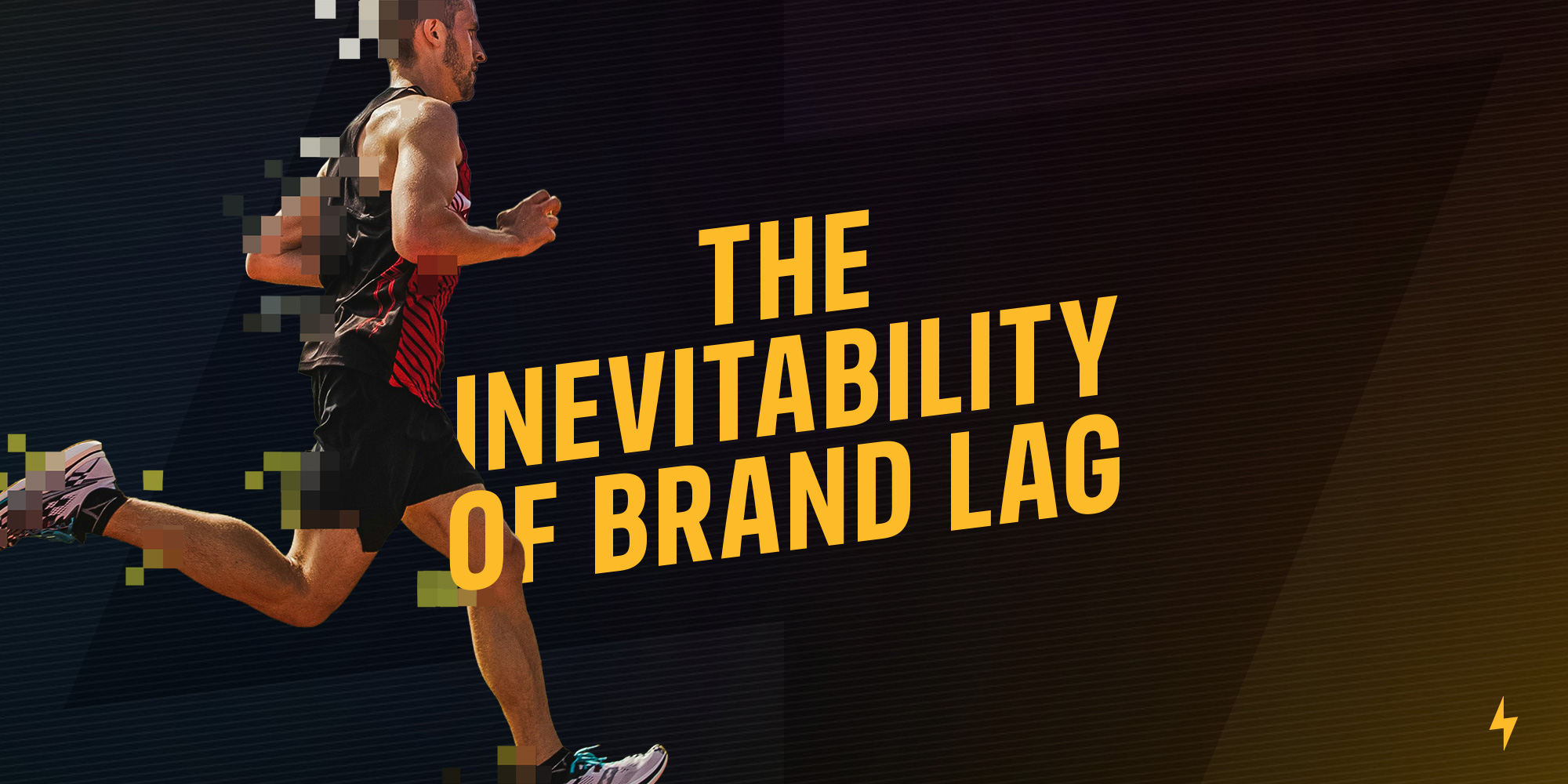
The inevitability of brand lag

I’m on a WhatsApp group with some friends that watch football ‘together’. Problem is, I usually stream the match online while they’re watching on live TV, which is generally only a few seconds behind. But it does mean that if there’s a goal, I’ll find out about it from the group before I see it happen.
Not ideal. Whether it’s a slow clock, latency between sound and image on a movie, or a pre-empted penalty, lag is rarely a good thing.
Introducing brand lag
In business, one of the areas we experience lag is in our brands. One of the main reasons clients come to Upshot for a rebrand is because they have progressed as a business, time has gone by, but their brand feels out of date or doesn’t represent them anymore.
It stands to reason that when we start an organisation on day one, we create a first iteration of our brand – statements, values, logos, colour palettes (even a name) – in order to get moving quickly. Then unless we’ve accurately anticipated the twists and turns that follow (development of our offer, growth in experience, changes to our market, unexpected external factors), the brand naturally represents an older, static version of ourselves.
It’s kind of inevitable.
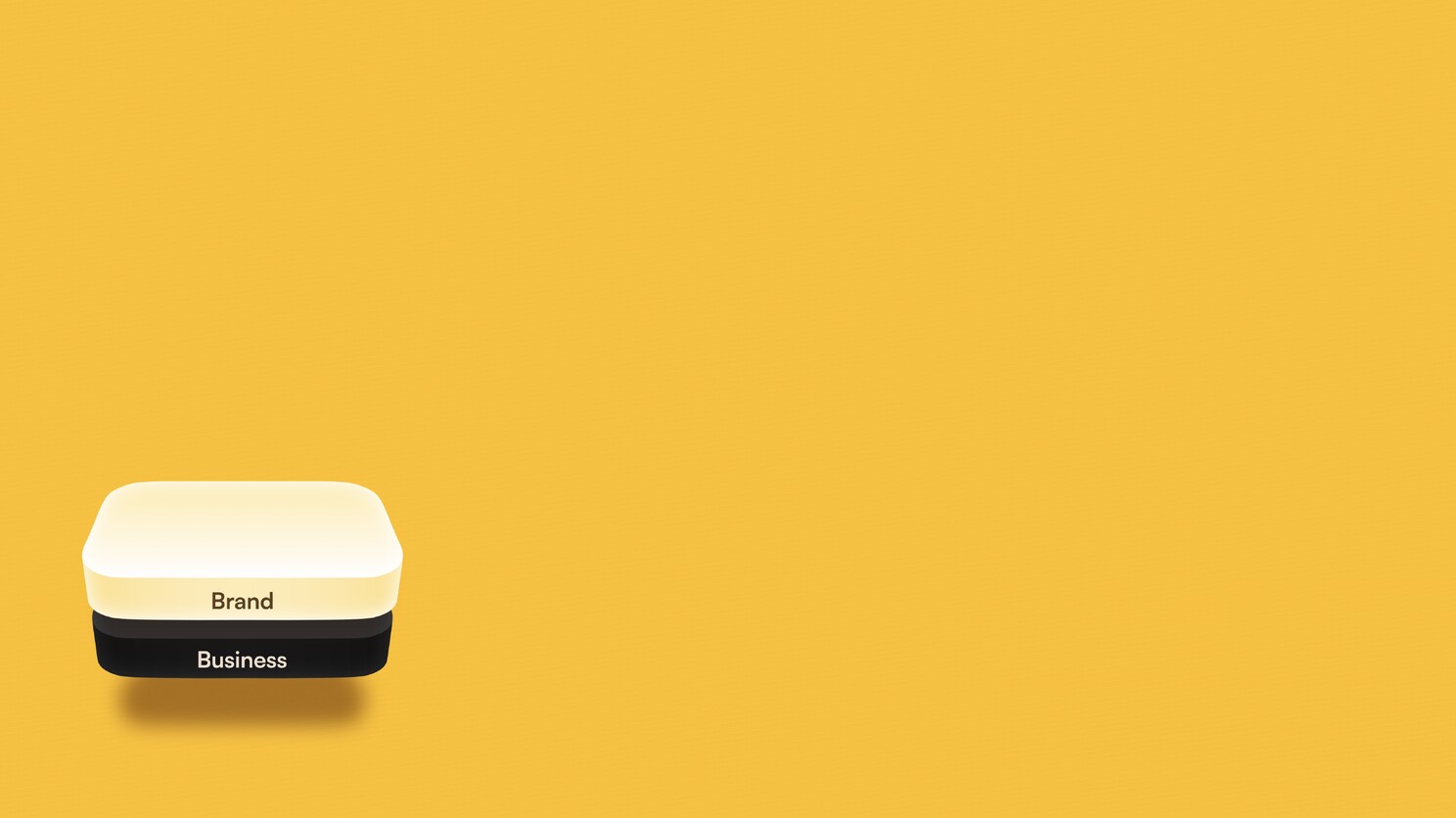
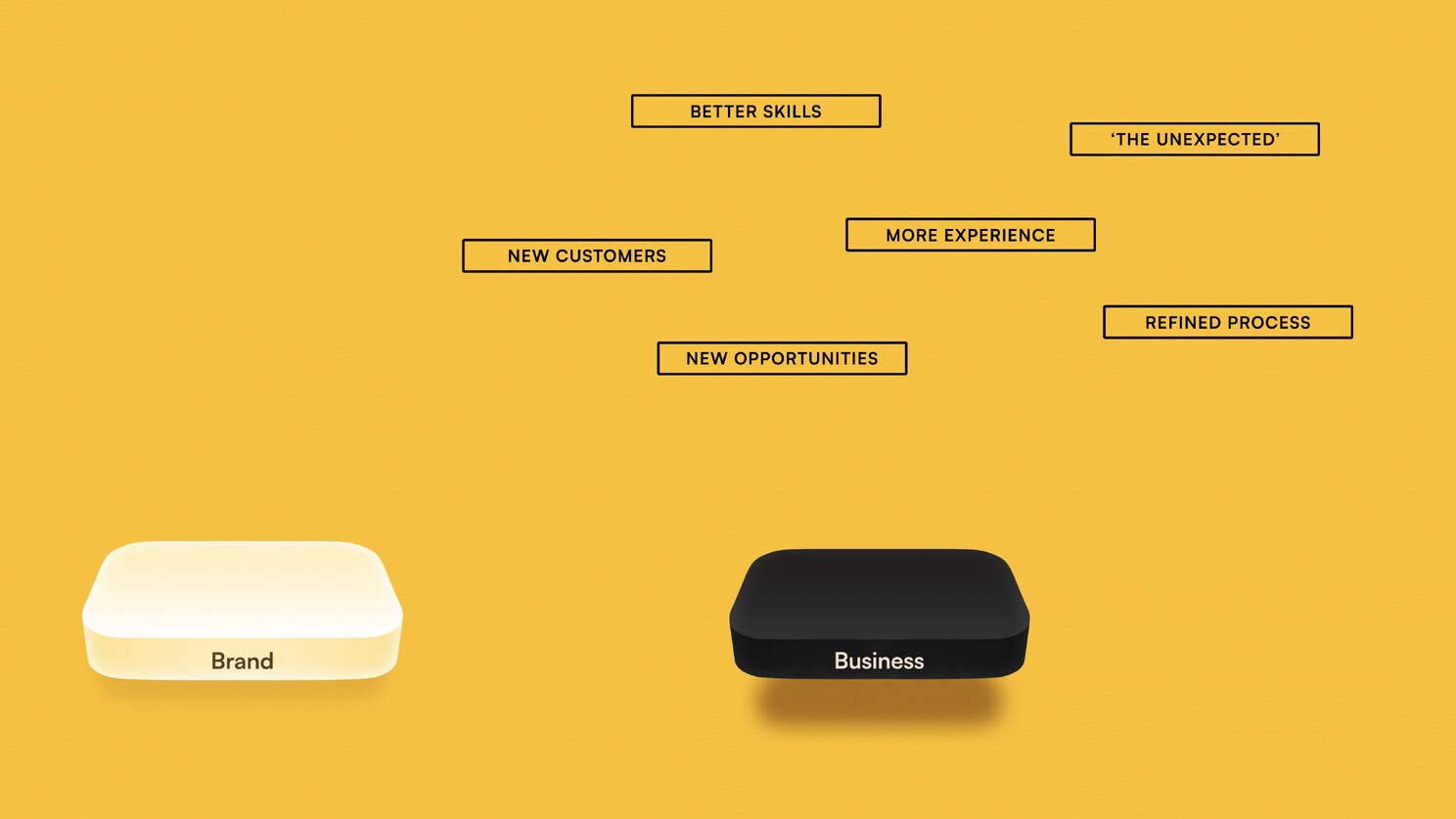

And we get that gap between where the business is heading, and what’s signaled by what we wrote and designed way back when. That’s brand lag. And whilst it doesn’t always stop progress immediately, in time, we start to notice things…
- Our design or written messaging suggests a less relevant, or less capable version of what the business has become
- The cold enquiries we get are mismatched, either understating the real value of your offering or missing the point of what we do
- We can attract negative opinions on our business because of perceived associations
- Employees aren’t advocates because the brand isn’t clear or compelling enough to champion
- We blend in with competitors, rather than finding a distinctive way of standing out.
And often, we try to address these as we go. Categorise them as marketing challenges, or culture problems. Find tactics to try and solve them. But they don’t go away.
Because a brand that lags creates drag. It holds the business back.
Building Building Brands' Brand
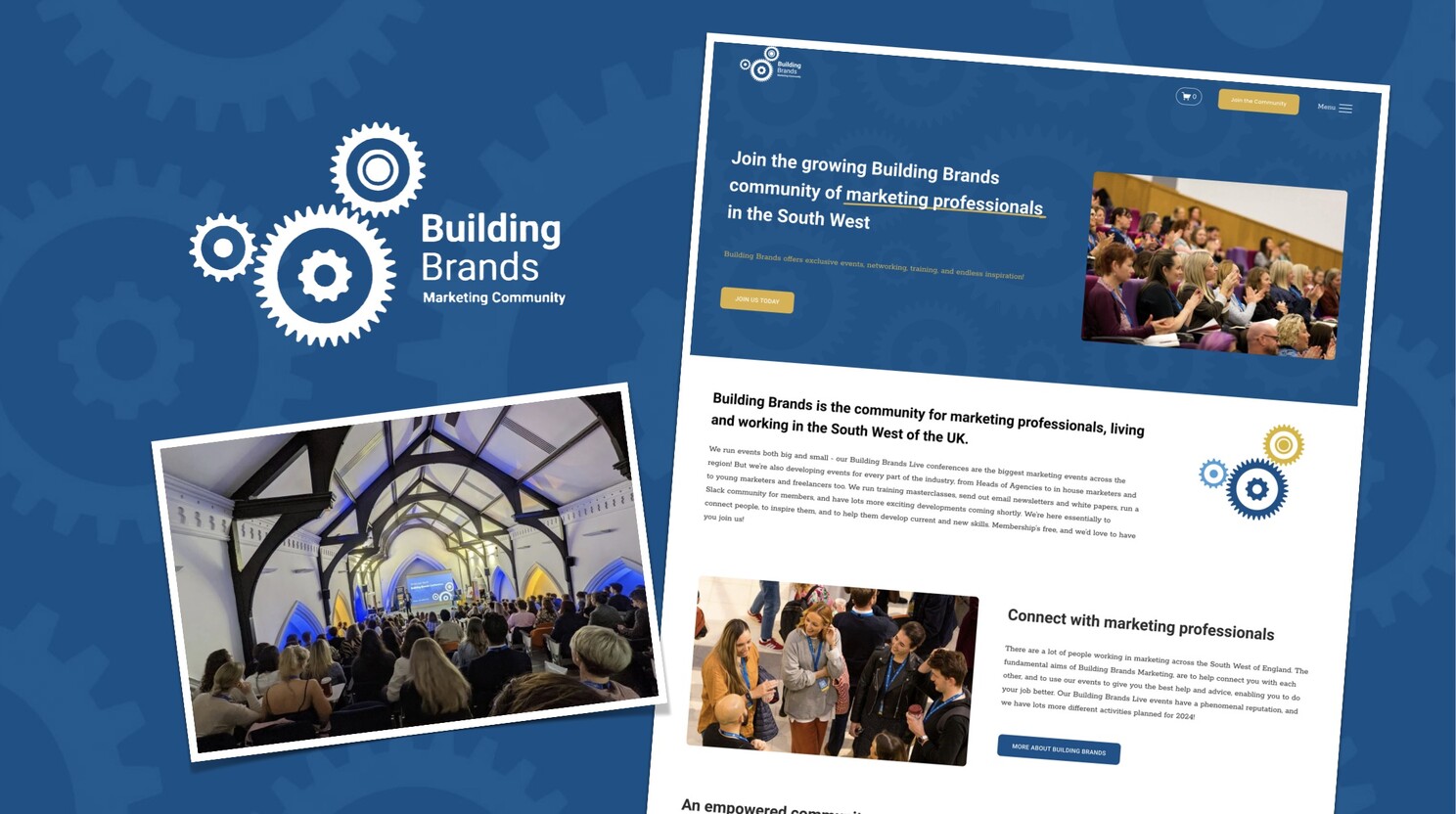
And that’s where we found Building Brands UK in 2024. Deep in brand lag.
- Appearing amateur, implying a lack of quality
- Saying yes to everything and burning out
- Struggling to appeal to specific audiences
- Everyone pulling in slightly different directions
- Apologetic and embarrassed about how they looked
Dave Briggs, the founder, had set it up as an offshoot from his day job as marketing manager at a law firm. It looked it, too (Dave’s words, not mine!). It had grown and needed to keep progressing – but it couldn’t.
A visual rebrand would have solved some of the problems. A refresh, a lick of paint. We could have done that but it would set them up to face the same issues again in the coming years. We needed to look deeper, to find out what the ‘thing behind the thing’ was – not the obvious problem, but what it revealed about the deeper one.
We had a lot of conversations with Dave and his team around personality, values and principles. We analysed stories and discussions about things that they’d done, things they wanted to do and things they’d never do.
Turn-offs. Clichés. Priorities.
We discussed posture, not just skillset. We tried to look past industry standards and best practices, and asked over and over again, ‘what’s the thing BEHIND the thing?’.
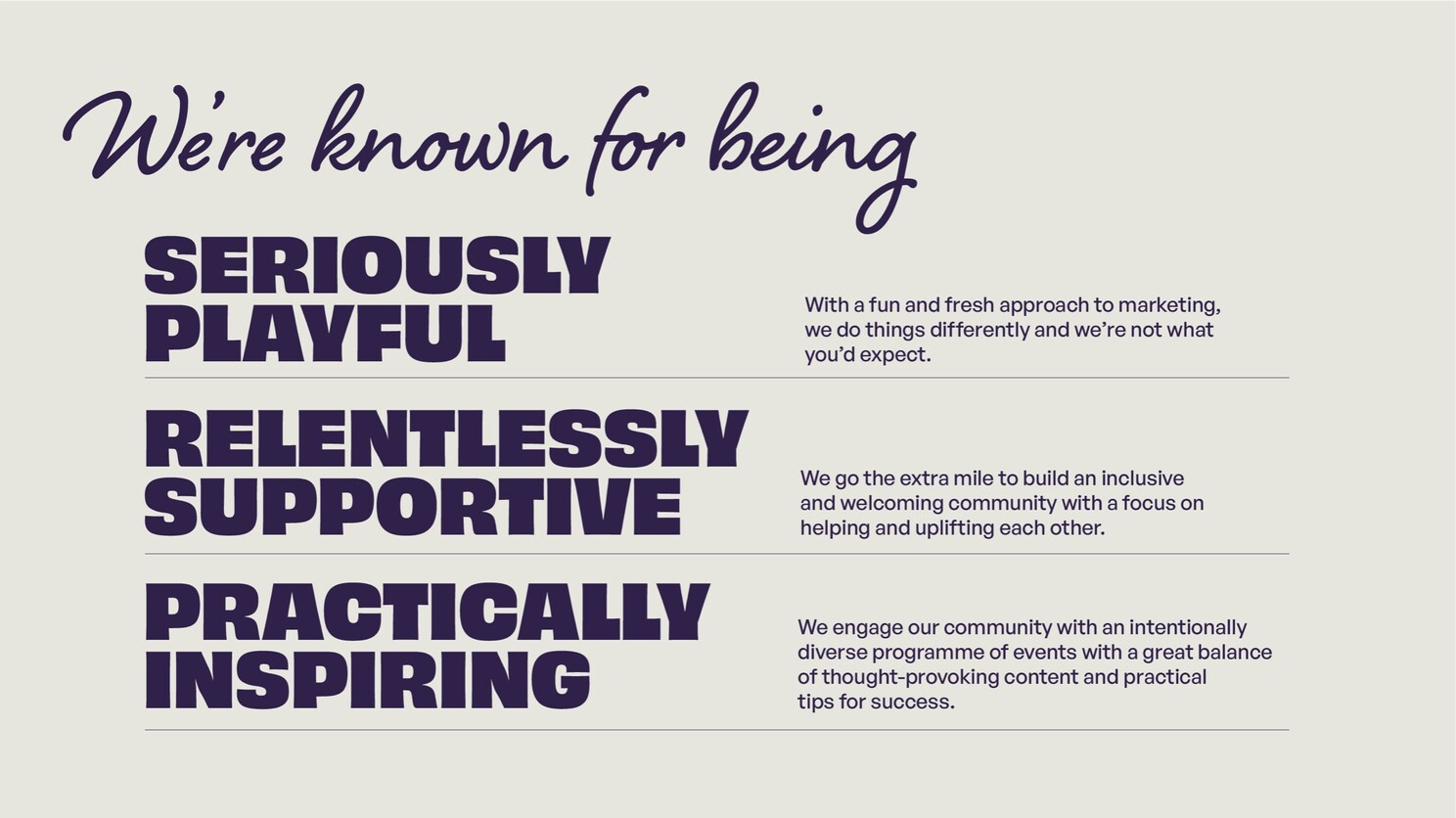
And we built a brand structure all about what they stood for and who they were, how this would be lived out, and how their audiences would benefit from it.
Alongside verbal brand supremo, Olivia Dunn, we developed narrative and articulation of the brand, as well as a clear brief for the visual identity.

How did this make a difference?
This article isn’t about the visuals (although you can see the case study here if you like). It’s about identity. It’s about how Building Brands had to take a step back before they could stride forward.
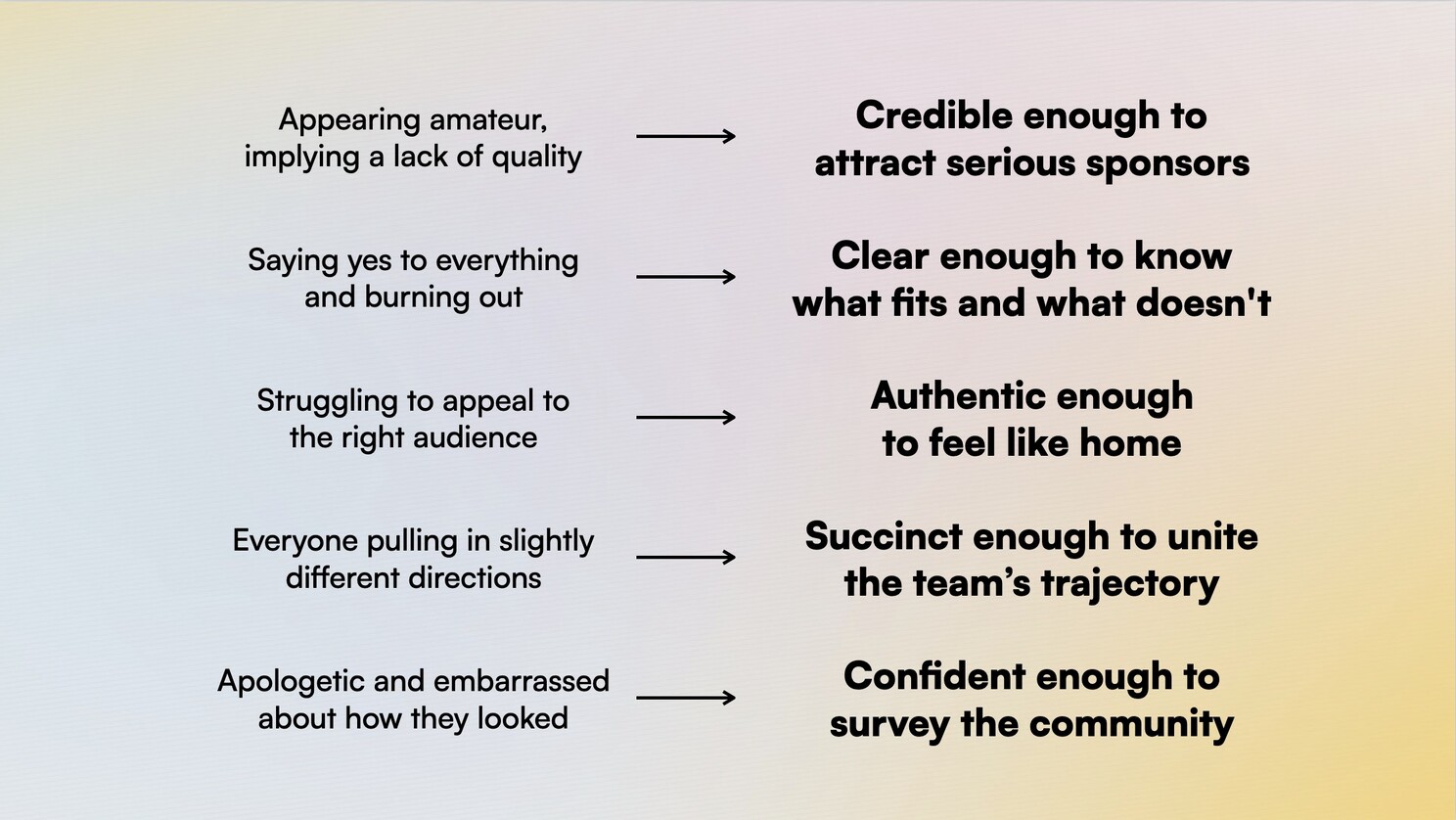
The process resulted in a brand full of credibility, clarity, authenticity, direction and unshakable confidence. And crucially it positioned them in a forward-thinking way – not a static way.
Dave was able to sign up high profile sponsors, confidently survey his community for feedback and insight, more effectively appeal to other target audiences and make strategic decisions on what they poured their limited time and resources into versus what they let slide.
What about your brand?
When a brand is so heavily informed by genuine identity it can do far more than just catch up with where the organisation has got to. It can sit ahead and lead the way forward.
It can
- Guide innovation
- Inspire marketing ideas
- Reduce analysis paralysis
- Build clear reputation
- Support intentional culture
- Justify confident pricing
- Shape strategic direction and far more.
And that’s what a brand is there to do.
Because a brand that lags creates drag. Whereas a brand that leads creates momentum.
How to start addressing brand lag
For Building Brands, they needed the full package. A rebrand was the right next step.
But not every organisation is ready to rebrand. It’s not something you do lightly. So if you’ve read this and recognised some telltale signs of brand lag in your organisation, what can you do about it this week?
Here are a few exercises I’d recommend.
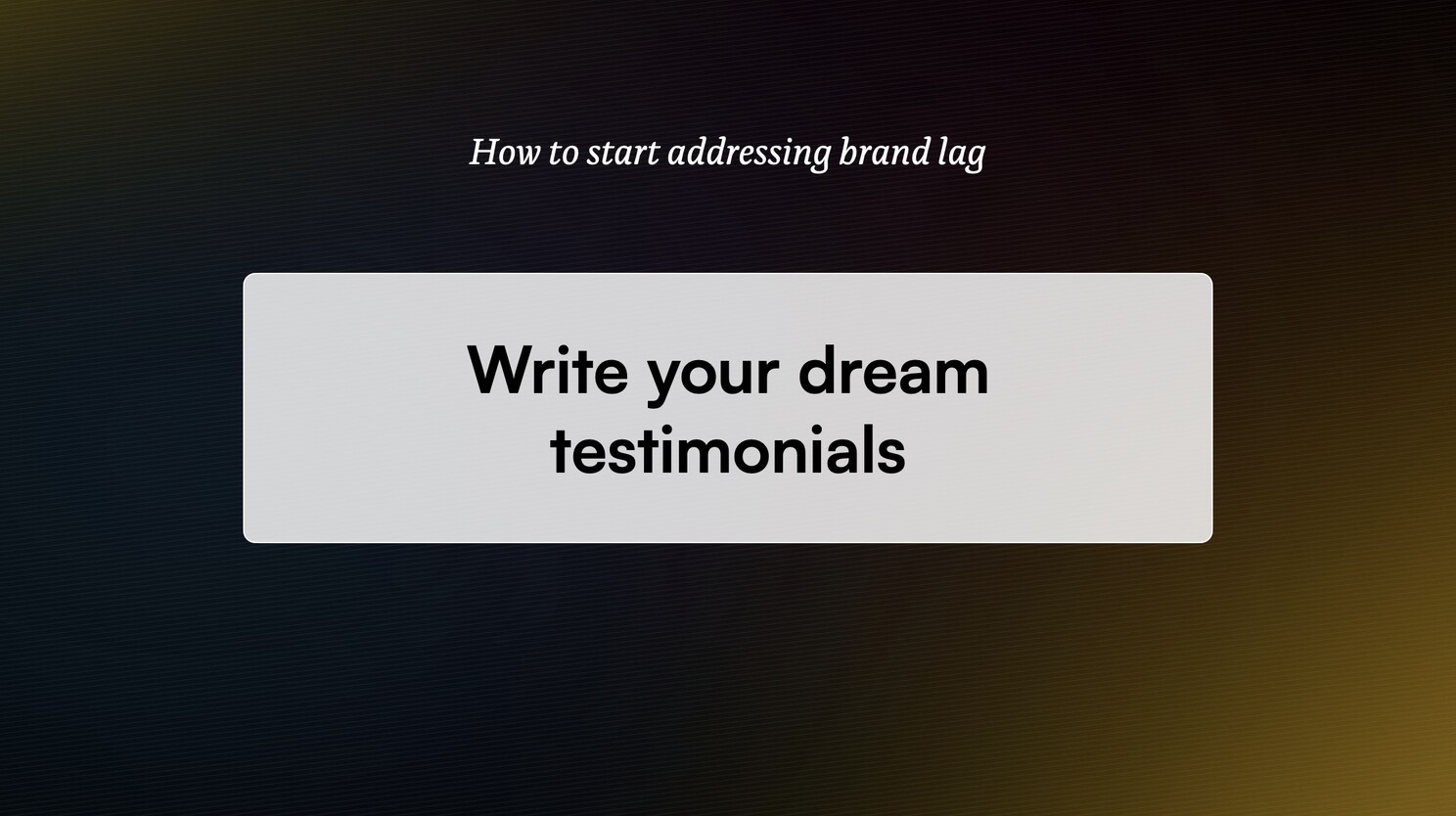
Think about 4–5 stakeholders or audiences and write out a review or testimonial, around a paragraph, that you’d love to receive from them. In a dream world, what would a particular kind of customer, user, employee say about your service or brand? Now double its intensity! Really push it. So it’s making you really blush. When you take the time to seriously write this, you’ll find what you want people to feel about your business and the impact you want them to notice. Don’t share these publicly, but reflect on what they reveal.
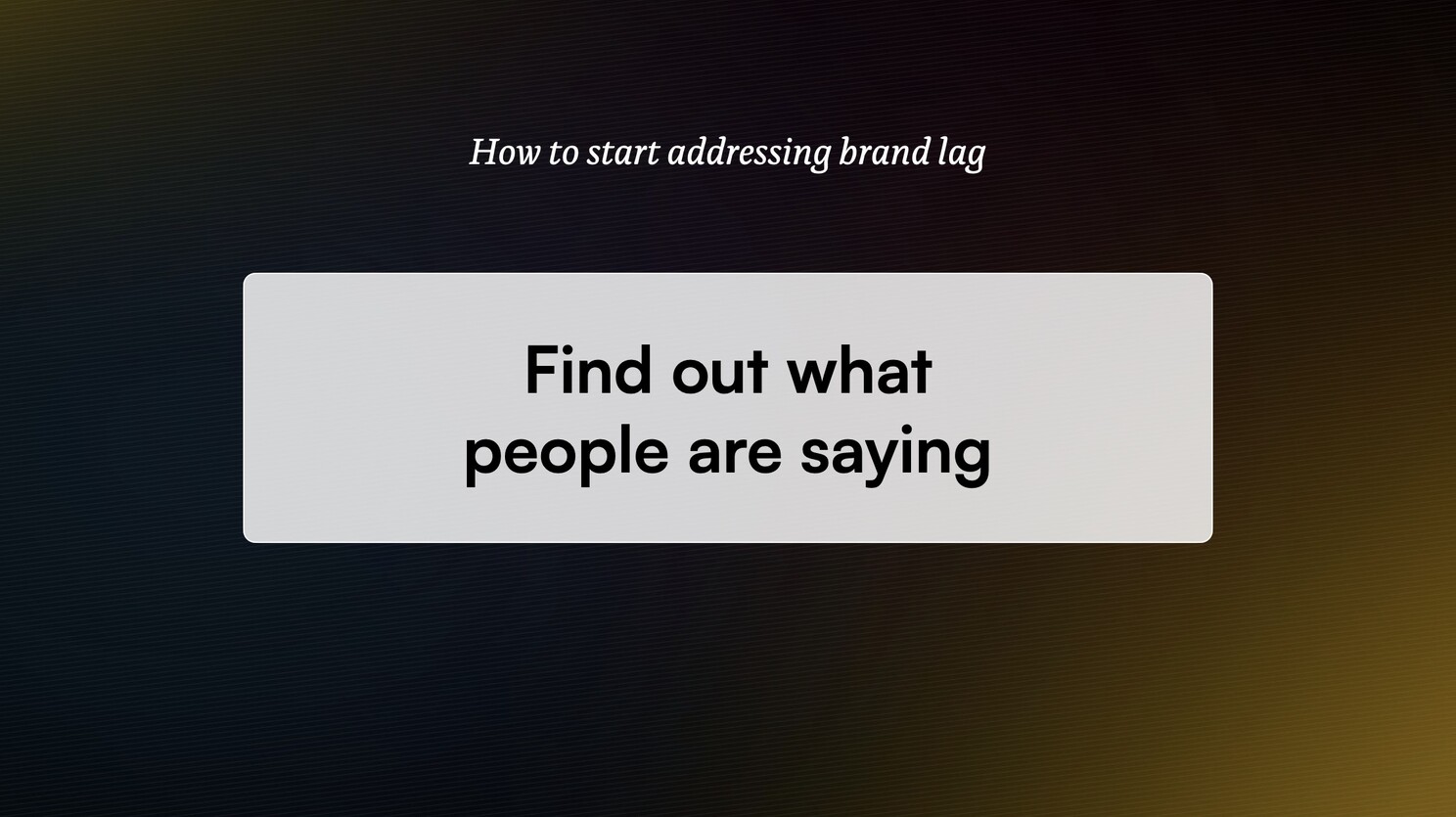
Collect real testimonials and reviews. Ask people for key words they would say about your business. Ask them for examples of what’s so good about it. Do the research and find the thing behind the thing. Are they saying the kinds of things you want to be known for yet? If not, how can you start doing more to ensure they are?
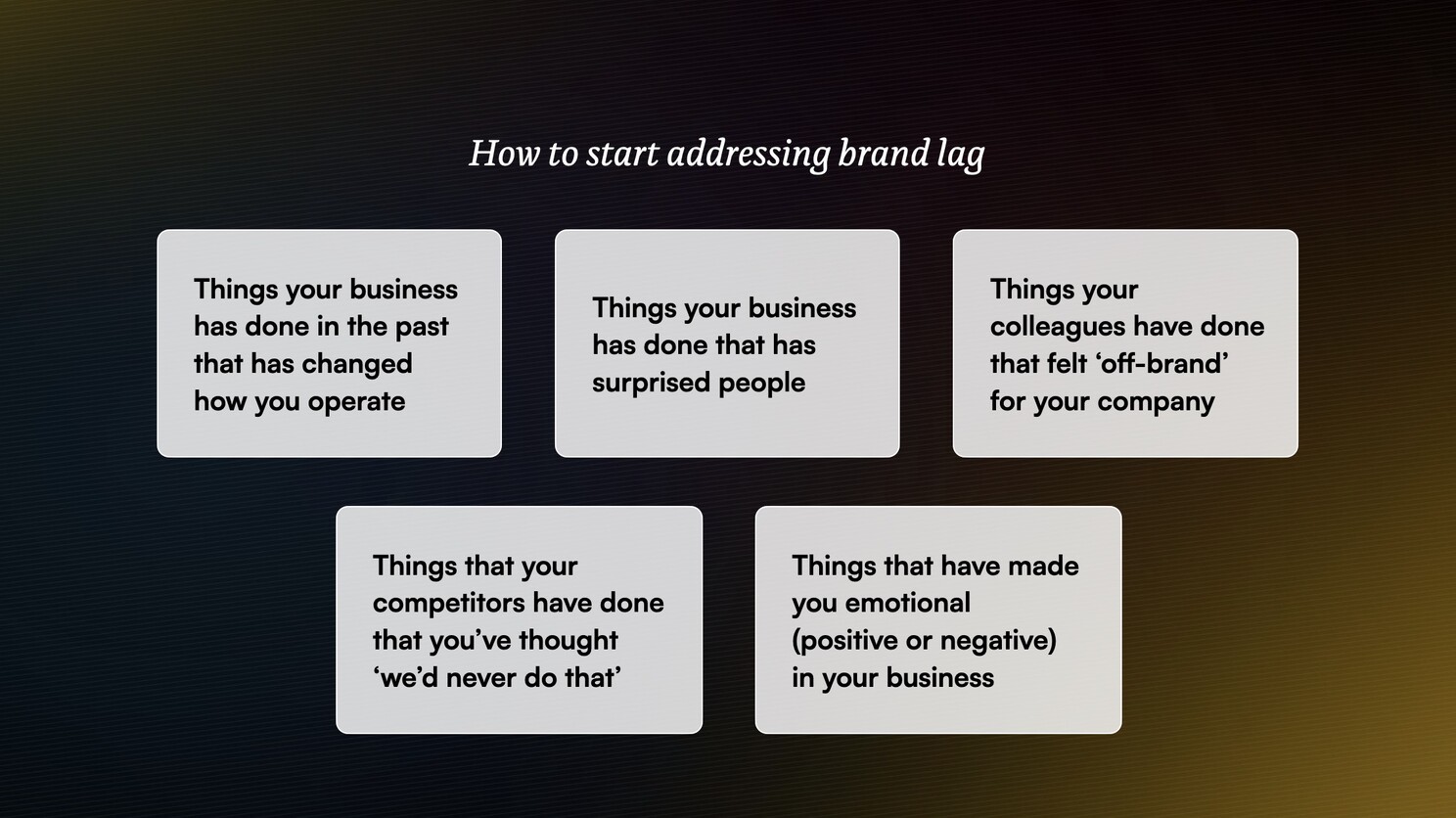
Try to think about…
- Things your business has done in the past that has changed how you operate
- Things your business has done that has surprised people
- Things your colleagues have done that felt ‘off-brand’ for your company.
- Things that your competitors have done that you’ve thought ‘we’d never do that’
- Things that have made you emotional – positive or negative – in your business.
What emotional hooks, underlying truths and critical themes do these reveal? Is there a thing behind the thing that could help differentiate or inspire connection with your brand?
I’d really recommend spending a good chunk of time with these activities. On your own, with a colleague, with a friend or even a client. Challenge yourself, and be open to challenge.
It’s worth it. Because a brand that lags creates drag, and a brand that leads creates momentum.
Photo by Hannah Coleman on Unsplash
Heard enough, and want action?
Explore our thought process more or discuss your own brand challenge by booking a call now.