When seven companies became one group, discovering identity at the group's core became critical
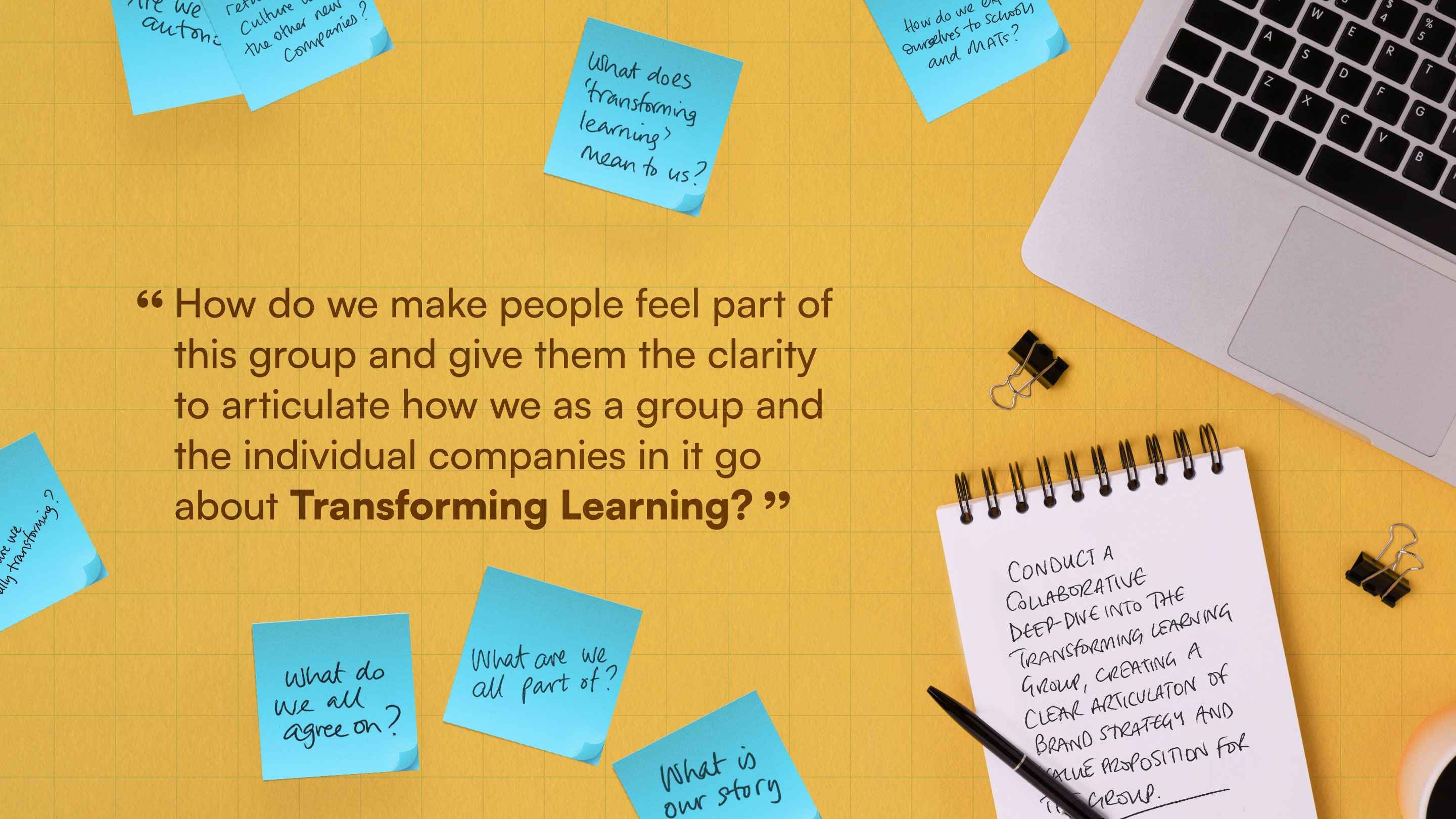
Transforming Learning Group (TLG) had ambition in spades. In just two years, they'd grown from 3 to 7 education technology companies — Turn IT On, School ICT, Salamander, Vital York, GDPR Sentry, Locker, and SBM Services. On paper, the group had everything: expertise, market presence, and a bold mission to ‘transform learning’.
But something fundamental was missing: a clear sense of who they were as a group.
Without this, the leadership team faced a series of dilemmas:
- Business leaders couldn't articulate what being "part of Transforming Learning Group" actually meant.
- Transforming Learning was a huge claim – did it mean the same thing to everyone?
- Companies in the group weren’t sure what they were part of, or how closely they were expected to conform.
- The group risked remaining seven siloed companies rather than one unified force; also a challenge when articulating the group vision clearly to customers and in the education sector.
They had the structure. They had the expertise. What they lacked was unshakeable confidence in their collective identity.
What Upshot Did
Discovering Who They Really Are
We didn't start with logos or colours. We started with the hardest questions: Who are you? Why do you exist? What makes you remarkable? What does Transforming Learning really mean?
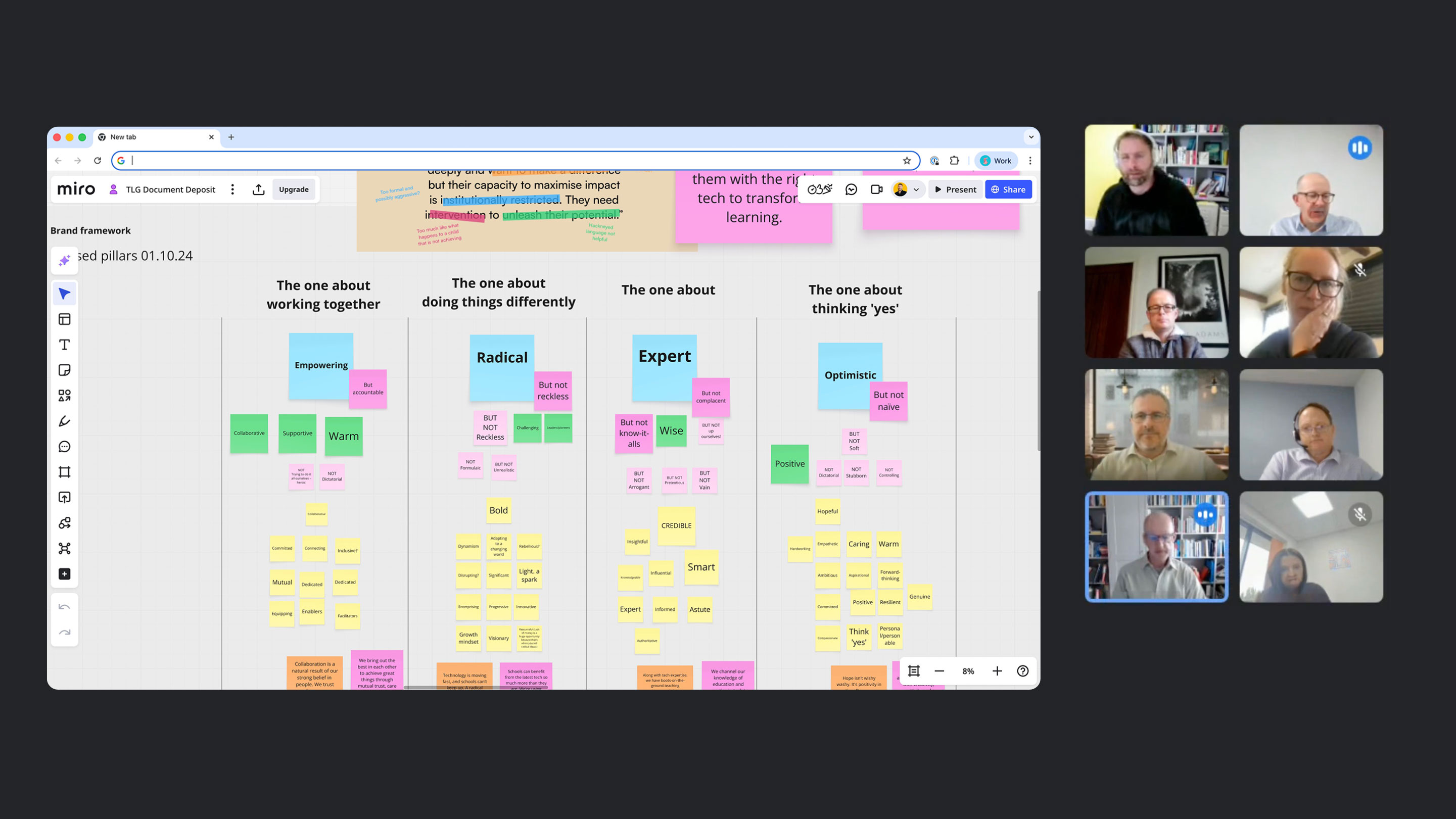
Through collaborative workshops, we helped TLG discover their collective identity — not by imposing one, but by drawing out what was already there and giving it clear language.
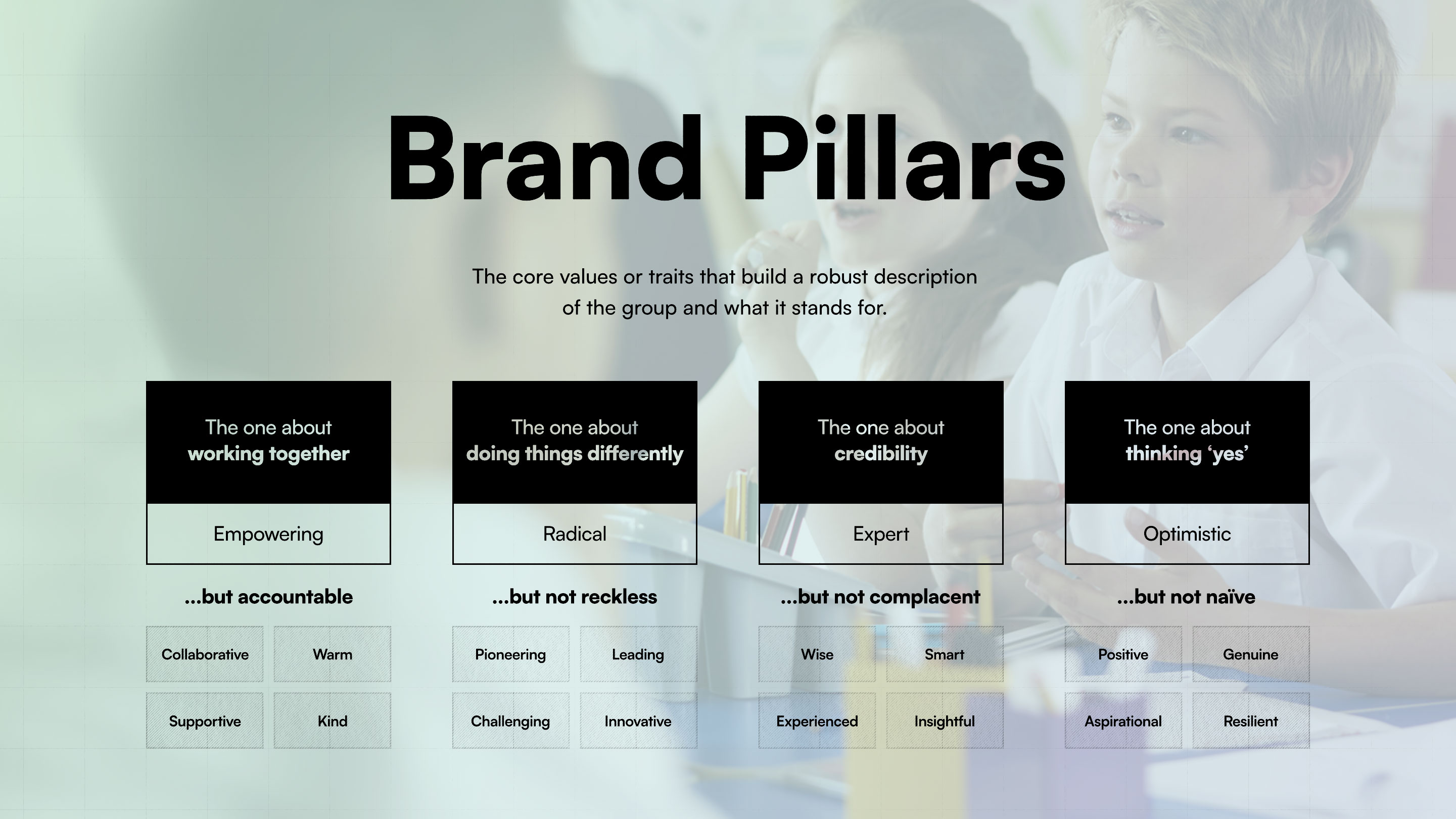
Four Identity Pillars
Working with the excellent Olivia Dunn (Profound), we articulated TLG's fundamental purpose: to improve educational outcomes by empowering schools to transform their use of technology and data. But more importantly, we defined how they do this through a unique combination of attributes.
Empowering but Accountable – the one about working together
Radical but not Reckless – the one about doing things differently
Expert but not Complacent – the one about credibility
Optimistic but not Naïve – the one about thinking ‘yes’.
These ‘values’ weren't aspirational statements plucked from thin air. They were the DNA already running through the group — now clearly articulated so everyone could see it, speak it, and act on it.
Making It Real
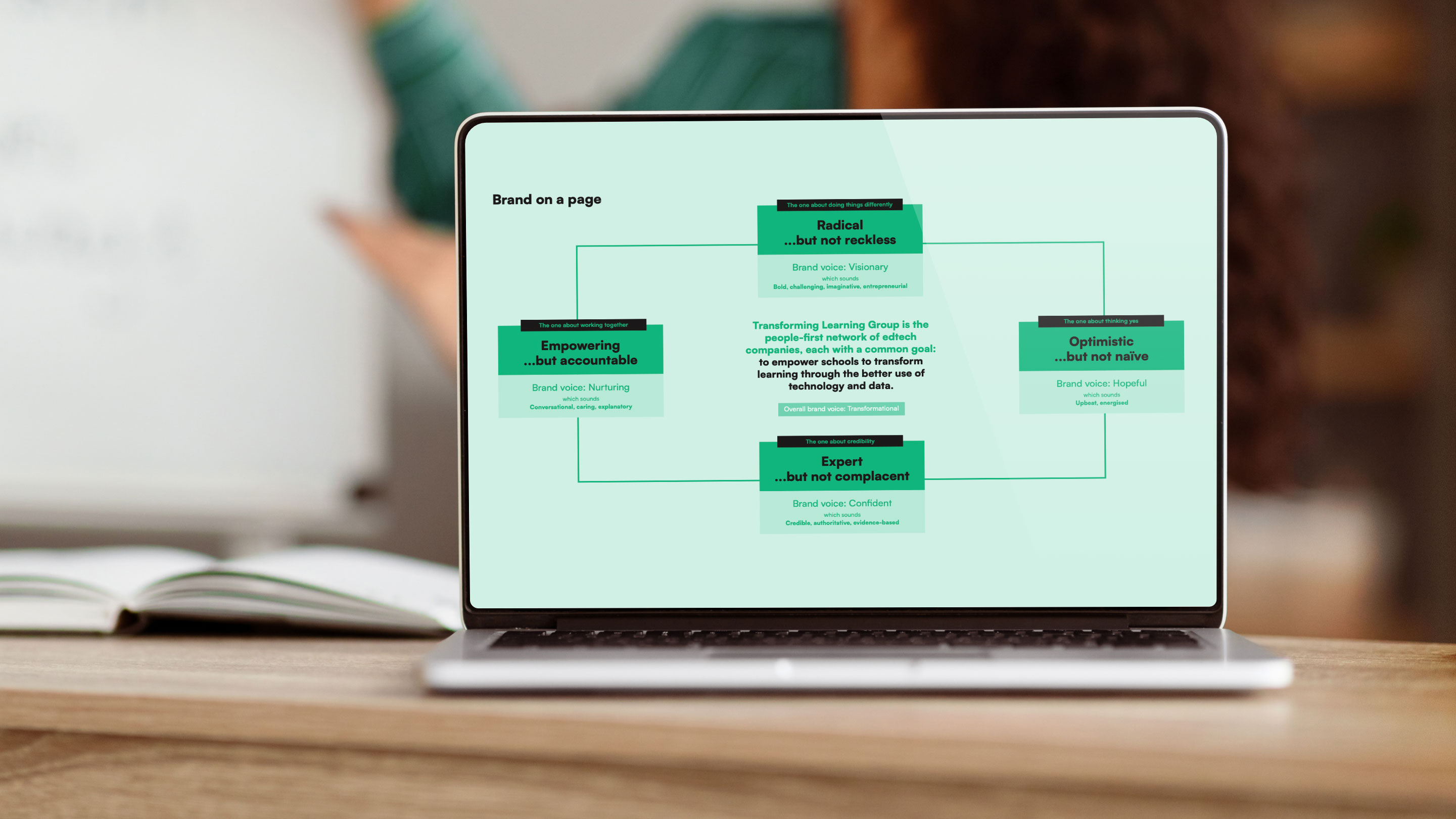
For each pillar, we mapped exactly how it creates value. For example:
"We're known for being Empowering but Accountable, which makes internal audiences feel trusted and energised, and enables them to cultivate a caring, high-trust culture where people can thrive."
This framework extended to external audiences too — ensuring the identity worked both ways.
We also created a manifesto that brought the identity to life in compelling language. Rather than corporate platitudes, it spoke with genuine conviction about TLG's role in transforming education: "We're catalysing change, from day-to-day school operations through to the highest levels of educational governance."
A Roadmap Forward
The work concluded with a comprehensive brand gap analysis — mapping where TLG was versus where they needed to be across positioning, visual and verbal identity, marketing, culture, and innovation. This gave the leadership team a clear roadmap for bringing their identity to life across every touchpoint.
The Impact
The transformation wasn't just about having nice words on a wall. When you have unshakeable confidence in your identity, everything else falls into place. For TLG this looked like:
Confident Communication
The leadership team could finally speak confidently about who TLG is and why it exists. This confidence cascaded down — business leaders began using TLG language in their own organisations, creating genuine cultural unity.
Commercial Advantage
Companies in the group like Turn IT On now proactively mention TLG in tender submissions, positioning themselves as part of a broader, more capable organisation. They're not hiding the group identity — they're leading with it because they understand its value.
Strategic Clarity
The "Empowering but Accountable" pillar directly shaped a "scheme of delegation" — a framework defining which decisions businesses control versus which require group approval. Identity literally informed operational structure.
Innovation with Purpose
TLG is now developing an innovation strategy guided by "Radical but not Reckless" — ensuring they innovate quickly whilst avoiding reckless resource waste. Their identity provides the guardrails.
Smarter Growth
When evaluating potential acquisitions or staff, TLG can now ask: "Does this company or person align with our identity?" Values alignment has become the first filter, making strategic decisions faster and more confident.
External Presence
Companies like SalamanderSoft now represent TLG at industry conferences like EduGeek, speaking with authority about the group's vision. They're not just presenting — they're building TLG's reputation as thought leaders.

"You've got to build strategic identity at the very beginning. It's absolutely critical to start by creating a common set of values, a shared understanding of purpose and unity. This is fundamentally about culture setting — it's highly strategic. What do we want to be? How do we create unity?"
Why This Matters for Growing Organisations
TLG's challenge is far from unique. When organisations grow through acquisition or rapid expansion, operational integration often takes priority over identity clarity. It feels more urgent to align finance systems or standardise processes than to answer philosophical questions about identity.
But TLG's experience proves the opposite: without identity clarity first, operational integration lacks direction. You can't build a unified culture if you don't know what you're unifying around. You can't make confident strategic decisions without a framework rooted in who you are.
As Rosie reflected: "This isn't necessarily brand work in the way people often think about branding — brand is often thought to be externally facing. Rather in this case it is fundamentally about identity. And identity drives everything else."
The foundational identity work gave TLG something no amount of process documentation could provide: unshakeable confidence in who they are, what they stand for, and where they're going. With that foundation in place, everything else — from operations to innovation to growth — has a clear direction.
Strategic partnership and copywriting: Olivia Dunn | Profound |
